Hannah Overton back in Nueces County, Texas for Post-Conviction Writ of Habeas Corpus Hearing

April 23, 2012

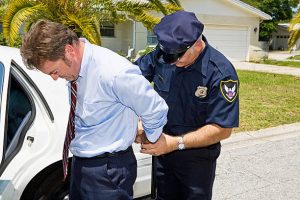
handcuffs.jpgHannah Overton, who is currently serving a life sentence without the possibility of parole, is back in the 214th District Court in Nueces County, Texas for a hearing on her application for a writ of habeas corpus with her writ lawyers lead by Cynthia Orr and assisted by Gerry Goldstein, John Raley and Dayna Jones. In 2007 Hannah was tried in the 214th District Court, Nueces County, Texas. She was found guilty of capital murder by omission in the poisoning death of 4 year old Andrew Burd.

In a rather uncommonly strict remand order, the Court of Criminal Appeals ordered on February 8, 2012 that the trial court must hold a hearing with live testimony within 90 days of the order and that all supplemental findings and conclusions of law must be returned to the Court of Criminal Appeals within 120 days of the order. Justice Cochran, joined by Justices Price and Johnson, issued a statement concerning the remand order. In that statement, Justice Cochran gave direction to the parties and the trial court on what needs to be decided in this matter. "The judiciary must be ever vigilant to ensure that verdicts in criminal cases are based solely upon reliable, relevant scientific evidence--scientific evidence that will hold under later scrutiny." Justice Cochran went on to say: "The problem in this case...is not that the science itself has evolved, but that it is alleged that the scientific testimony at the original trial was not fully informed and did not take into account all of the scientific evidence now available." Justice Cochran concluded by stating: "These are not easy issues, but fairness both to the applicant who is serving a sentence of life without parole and to the State and the memory of the child victim, demands that our verdicts will withstand the test of time such that the guilty are punished and the innocent are not. Further, public support of the American criminal justice system depends upon its confidence that the courts reach accurate verdicts based upon reliable scientific evidence."

In addition to wading through the scientific evidence, Judge Longoria will also hear testimony concerning whether the state withheld Brady evidence, whether trial counsel were ineffective and whether Hannah is innocent based on newly discovered evidence.

Continue reading "Hannah Overton back in Nueces County, Texas for Post-Conviction Writ of Habeas Corpus Hearing" »

Trayvon Martin Case Raises Questions: When Can San Antonio, Texas Residents Use Deadly Force?

April 12, 2012

trayvon.jpgStand Your Ground Law, Shoot First Law, Castle Doctrine, Make My Day Law, Defense of Habitation Law - There are many names across the United States used to describe the approved use of deadly force by a person who feels threatened. In the wake of the shooting death of Florida teenager Trayvon Martin, emotions on both sides of the proverbial fence have been running high. George Zimmerman, the man who fired the fatal shot that killed 17-year-old Martin, is being charged for second degree murder. The outcome of the trial remains to be seen, but the events surrounding both Martin and Zimmerman have many people asking the same question, what is a self-defense law? In Texas, the law is found under Chapter 9 of the Texas Penal Code.

In March 2007 Governor Rick Perry signed Senate Bill 378, a law which allows Texans to use deadly force when they are threatened in their homes, cars, and public areas. The bill took effect September 1, 2007. This bill amended the previous law that had been in place. The biggest change to the law was the removal of a person's "duty to retreat". This means that Texans no longer have to make an attempt to leave a potentially dangerous situation before using deadly force in self-defense.

Chapter 9 of the Texas Penal Code clearly states when, where, and why force may be used by a person to defend themselves or others. In addition to protecting one's own self from harm, the law states:
1. A person is justified in using deadly force against another to protect a third person
2. A person is justified in using force, but not deadly force, against another when the force is immediately necessary to prevent the other from committing suicide or inflicting serious bodily injury to himself
3. A person is justified in using force against another when the force is immediately necessary to prevent or terminate the other's trespass on the land or unlawful interference with the property

Continue reading "Trayvon Martin Case Raises Questions: When Can San Antonio, Texas Residents Use Deadly Force?" »

Two Intoxication Manslaughter Cases in San Antonio, Texas With Two Very Different Sentences

dwi.jpgTwo intoxication manslaughter trials in San Antonio had many commonalities, but wildly different outcomes. Sandra Briggs had a blood alcohol level of 0.14 and Jenny Ann Ybarra had a blood alcohol level of 0.13. Both accidents occurred on Loop 410, Assistant District Attorney Charles "Chip" Rich was a prosecutor in both trials, and both were sentenced to prison. But, Ybarra was sentenced to 2 years while Briggs was sentenced to 45 years. It seems that, when it comes to punishment, irregularity and inconsistency play a large role during DWI trials in San Antonio. The difference between the two cases - Ybarra's victim was a young woman and Briggs' was a San Antonio Police Officer.

Briggs, 59, was arrested in October 2010 and she was convicted of a first degree felony on January 20, 2012. She admitted to drinking at Bunratty Pub and stated that she had five drinks in about four hours. On her way home she hit a disabled pickup truck that was stopped near the Military Drive exit of Loop 410. She then ran to into Sergio Antillon, 25, an off duty rookie police officer, who was standing about 10 feet from the truck. He was pinned between Briggs' car and the guardrail. He died two weeks later when he was taken off life support. She stated that there were no flares on the road and the pickup truck was partially in the right hand lane.

Briggs pleaded no contest to intoxication manslaughter and the trial, which was held at the 186th state District Courtroom, was a punishment only jury trial. Criminal Defense Attorney Edward Piker argued that there were more than just the drinks that played a factor in the wreck, including the darkened roadway and the fact that the disabled truck was blocking part of the lane. The Bexar County jury deliberated for about four and a half hours before handing down the punishment. She has to serve at least half her sentence and is eligible for parole at the age of 81.

Ybarra, 32, was sentenced to a second degree felony on February 15th, 2012, for the early morning accident in December 2007 that claimed the life of Erica Nicole Smith, 23. She had been out with friends that night and had not been driving. She had planned to stay the night at a friend's house, but decided to drive home at about 3 AM so she could be there in the morning when her daughter woke up. Ybarra unknowingly drove the wrong way on Loop 410 and had a head-on collision with the car that Smith was riding in. While, on the surface, it seems that this was a very cut and dry case, there were several factors that contributed to the accident.

Sabrina Shaner, the driver of the car that Smith was a passenger in, was also intoxicated at the time of the accident. In addition, it was found that the paramedics delayed help to the victim. EMS left Smith untreated for more than two hours because they assumed she was already dead. Smith would die of massive head trauma. The three San Antonio paramedics had their certifications suspended in 2008 because they did not immediately check on Smith.


Continue reading "Two Intoxication Manslaughter Cases in San Antonio, Texas With Two Very Different Sentences" »

San Antonio Criminal Defense Community Has Lost One of its Greatest Fighters

February 25, 2012

JimmyParks2012.jpgFamily, friends, and the San Antonio criminal defense community recently said goodbye to attorney James "Jimmy" Parks, Jr. He was an accomplished criminal defense lawyer, with over 25 years of criminal law experience.

Parks attended Saint Mary's School of Law and went on to establish himself as one of the best defense lawyers in the country. His clientele included boxer Tony Ayala, Jr., ex-Spur Alvin Robertson, and South San Antonio Independent School District Superintendent Ron Durbin.
He received several distinctions, including: Best Lawyers in America; Scene in SA Best Lawyers in San Antonio; Texas Monthly - Top Attorneys; and Texas Super Lawyers - The Top Attorneys in Texas. He also authored the DVD Series "Winning in the Courtroom."

In addition to his impressive legal career, Parks also was a local radio personality. He was a high school football sideline broadcaster for San Antonio radio, appeared in Star 810 AM, and was a guest on KTSA's "Gang of Four Show".

Continue reading "San Antonio Criminal Defense Community Has Lost One of its Greatest Fighters" »

Federal Definition of "Rape" is Updated

February 8, 2012

After 85 years, the federal definition of rape is being updated. On December 6, 2011, a Federal Bureau of Investigation advisory board voted to expand the definition and Director Robert Mueller accepted the recommendation. The former definition was established in 1927 and can be found under the FBI's Uniform Crime Report. The old definition stated that rape was "The carnal knowledge of a female forcibly and against her will." The old definition excluded oral and anal penetration, the rape of males, the penetration of the vagina or anus with an object or body part other than the penis, the rape of females by females, the rape of children, and non-forcible rape.

The new federal definition of rape can be found on the FBI Uniform Crime Report website. Society has long acknowledged that rape can happen to women, men, and children. The new definition takes out the word "forcible" and includes men and children. It expands to include any nonconsensual penetration, regardless of the gender of the attacker or the victim. It also includes those who are mentally or physically incapable of giving consent.

The women's rights community has claimed this as a victory for victims of sexual violence. Vice President Joe Biden, who authored the Violence Against Women Act when he was a senator stated that victims have suffered long enough.

Even though 84,767 rapes were reported in 2010, many experts claim that the sexual assault numbers are too low. The underreporting of rape affects the federal funding for resources. The Centers for Disease Control and Prevention report that 1-in-71 men and 1-in-5 women will be raped in their lifetime. For expanded information on sexual violence, refer to the CDC website .

Continue reading "Federal Definition of "Rape" is Updated " »

FLDS Leader Warren Jeffs Still Making News Inside Texas Prison

January 7, 2012

WarrenJeffsMug.jpgWarren Jeffs has made the news again, this time from inside a Texas prison. His phone privileges have been cut off for 90 days, which started on January 6, 2012 following an investigation by the Texas Department of Criminal Justice. They looked into whether or not he abused his phone privileges. Though his phone privileges have been revoked, he is still allowed to receive visitors.

According to prison officials, calls Jeffs made out to people on his approved call list were put on a speaker by the person who received the call so he could preach to members of his church. Putting a phone call on speaker violates the rules of the Offender Telephone System. It is believed that Jeffs violated the phone rules several times, with at least two violations on Christmas Day. While the rules do not bar an offender from preaching from prison, officials state that an offender is not to talk to a group - they are limited to speaking to the one individual who is approved to receive the phone call.

According to the Texas Department of Criminal Justice website, the rules for the Offender Telephone System are as follows: available from 7 AM-10 PM, 15 minute time limit, and each offender has 240 minutes a month to use. All calls are subject to monitoring and recording, except for those calls between the offender and their lawyer. No calls are allowed to cell phones, internet services, 800 numbers, businesses, pay phones, or international numbers. The owner of the telephone number must be listed on offender's Visitor's List. Visitors can register their number by internet (texasprisonphone.com) or by telephone (866-806-7804). The person who receives the phone call from the offender must agree to not forward calls or make 3-way calls. It is interesting to note that the rules do not specially list putting a call on speaker phone as a violation.


Continue reading "FLDS Leader Warren Jeffs Still Making News Inside Texas Prison" »

Supreme Court Hears Confrontation Clause Issue - Result Will Have Impact on Expert Testimony in San Antonio, Texas

December 7, 2011

Arguments at the United States Supreme Court continued on December 6, 2011, as the justices heard oral arguments for the case of Sandy Williams, Petitioner v. Illinois Docket (#10-8505).

This is a case that pertains to the Sixth Amendment - specially the Sixth Amendment's Confrontation Clause. The Sixth Amendment states that "in all criminal prosecutions, the accused shall enjoy the right to a speedy and public trial, by an impartial jury of the State and district wherein the crime shall have been committed, which district shall have been previously ascertained by law, and to be informed of the nature and cause of the accusation; to be confronted with the witnesses against him; to have compulsory process for obtaining witnesses in his favor, and to have the Assistance of Counsel for his defense." The Confrontation Clause deals with the phrase "to be confronted with the witnesses against him." In other words, a person who is on trial has the right to see the witnesses who are offering testimonial evidence against them and they have the right to cross-exam the witnesses during the trial. (Furthermore, the Fourteenth Amendment makes the right to confrontation apply to the states and not just the federal government. The right only applies to criminal prosecutions, not civil cases or other proceedings.)

In this particular case, a DNA report was prepared by a third party, private lab. During the trial, the actual report was not admitted and none of the lab analysts who conducted the tests ever testified. Instead, an Illinois State Police forensic analyst was called to testify. This expert was never involved with nor observed the actual tests, and therefore had no knowledge of the methods used to obtain the results.


Continue reading "Supreme Court Hears Confrontation Clause Issue - Result Will Have Impact on Expert Testimony in San Antonio, Texas" »

U.S. Supreme Court Hears Oral Argument on Illegal Strip Searches -- Ruling Could Limit When San Antonio Officers May Search Detainees

November 16, 2011

Thumbnail image for supreme court.jpgOn October 12, 2011, the United Supreme Court continued its new term and heard oral arguments on a case that is a Fourth Amendment issue. The Fourth Amendment to the United States Constitution, which applies to the citizens of San Antonio, states that: "The right of the people to be secure in their persons, houses, papers, and effects, against unreasonable searches and seizures, shall not be violated, and no Warrants shall issue, but upon probable cause, supported by Oath or affirmation, and particularly describing the place to be searched, and the persons or things to be seized." While the oral arguments are over, the opinion from the court is to be determined.

Albert W. Florence, Petitioner v. Board of Chosen Freeholders of the County of Burlington, et al. raises the question of whether or not a jail or prison has the right to conduct a strip search on every person who is taken into custody, no matter what the charge(s) may be. This is a Fourth Amendment issue dealing with suspicion-less strip searches - should there be a flat rule or should it be determined on a case by case basis? This particular case began in 2005 when Florence was in the car with his pregnant wife and 4-year-old daughter on their way to dinner at his mother-in-law's house. His wife was driving and was pulled over for a routine traffic stop. Because the car was registered in Mr. Florence's name, the officer asked to see his identification in addition to his wife's. When the information was checked, the officer saw that there was a warrant for Florence because of an unpaid fine. Florence carried a copy of the court record to show that he actually paid the fine, but the officer took him into custody anyway. Florence was in custody in both Burlington and Essex Counties for a total of six days before he saw a judge, at which time he was immediately released. While he was in custody, Florence was subjected to two strip searches. Florence filed a lawsuit because he asserted that the searches were unreasonable because he was being held for failure to pay a fine, which is not a criminal offense in New Jersey (and let's not forget that he had already paid the fine).

Continue reading "U.S. Supreme Court Hears Oral Argument on Illegal Strip Searches -- Ruling Could Limit When San Antonio Officers May Search Detainees " »

U.S. Supreme Court: Criminal Cases to be Decided Will Effect Texas Criminal Justice

November 1, 2011

On October 4, 2011, the United Supreme Court began its new term and heard oral arguments on seven cases. Because the Supreme Court's opinions are considered the Supreme law of the land, its decisions will impact San Antonio and the entire Texas criminal justice system. Three of the cases deal directly with defendants serving time in state prisons - two cases concern inadequate representation and the third concerns Miranda rights. They are all seeking release on the grounds that they are being held in violation of their federally protected constitutional rights. While the oral arguments are over, the opinion from the court is to be determined.

Maples v. Thomas raises the question of whether or not a defendant can argue that a death sentence is unconstitutional because the lawyer messed up and did not file paperwork on time. The Eleventh Circuit court ruled that there was no reason to excuse the case. Maples confessed to the murders he is now serving time for, but he argues that his lawyers were so ineffective that he missed a deadline to appeal the ruling. Two lawyers had taken on Maples' post-conviction proceedings Pro Bono. At some point after taking on the case, they both got new jobs at different law firms. They failed to contact the court, and important paperwork that was mailed to their old law firm was returned, unopened. The court then failed to try to make any further contact with the lawyers or with Maples. Thus he missed necessary deadlines, and by the time he found out about the mistake it was too late for him to correct it. In other words, his right to appeal was violated because lawyers quit the case without informing the court and the Eleventh Circuit court upheld that Maples had defaulted on his claims when he missed deadlines.

Howes v. Fields asks whether Miranda warnings must be read to a prisoner when being questioned because a prisoner is considered already in custody. Randall Fields is serving time on one crime when he was taken from his cell to another part of a prison and questioned by police officers about an unrelated crime. He was never read his rights and he argues that information obtained in that questioning session should not have been used against him in the trial that followed. If police officers do not to read a Miranda warning to a person, they can still question that person but cannot use that person's statements against them in a criminal trial. So, the question is: If a person must be read their rights if they are in custody, is a prisoner automatically in custody and therefore entitled to the Miranda warning according to the Fifth Amendment?


Continue reading "U.S. Supreme Court: Criminal Cases to be Decided Will Effect Texas Criminal Justice" »

Watch Out San Antonio, Big Brother Could Be Keeping an Eye on You

October 24, 2011

big brother.jpg The United States Supreme Court will hear arguments on Tuesday, November 8, 2011, for the case of U.S. vs. Jones. In 2005, police in Maryland attached a GPS device to Antoine Jones' car. They tracked his every move 24-hours a day, seven days a week, for four weeks. All of this was done without a warrant and without his consent. Based on information gained from this warrantless GPS tracking, Jones was sentenced to life in prison on drug charges. The D.C. Court of Appeals overturned the conviction and ruled that the constant GPS tracking violated Jones' Fourth Amendment rights.

The Supreme Court must now answer the questions: (1) Whether the warrantless use of a tracking device on petitioner's vehicle to monitor its movements on public streets violated the Fourth Amendment; and (2) whether the government violated respondent's Fourth Amendment rights by installing the GPS tracking device on his vehicle without a valid warrant and without his consent.

The Fourth Amendment to the United States Constitution states that the right of the people to be secure in their persons, houses, papers, and effects, against unreasonable searches and seizures, shall not be violated, and no Warrants shall issue, but upon probable cause, supported by Oath or affirmation, and particularly describing the place to be searched, and the persons or things to be seized. The Founding Fathers could not, obviously, anticipate such technology as GPS devices and cell phones, but the amendments must evolve and adapt to maintain the Constitutional integrity and original intent of the document. And San Antonio residents, as citizens of the United States, justifiably expect the three branches of government to maintain a political system where it adheres to limits in power and endeavors to uphold reason, common sense, and individuality.

Are the measures the government employs to catch the bad guys restricting the basic freedoms that San Antonians take for granted? When the government and its acting bodies are allowed to regulate unchecked, we run the risk of living in a world that weakens our pride, damages our liberty, and distorts our equality. Are we willing, as citizens of Bexar County, to sacrifice our freedoms in the face of so-called security? People are expected to turn a blind eye to the repression of civil liberties and Constitutional guarantees for the supposed greater good. Are Texans implying consent to have our movements tracked and monitored simply by driving our cars on public roads? American citizens live under an expectation of privacy and those who possess positions of governmental power do so because of our consent.

Continue reading "Watch Out San Antonio, Big Brother Could Be Keeping an Eye on You" »

Terrorists or Drunk Tourists? Break-in at San Antonio, Texas Courthouse Raises Security Concerns

October 19, 2011


While most people try their hardest to stay out of a court room, five young Foreign National men were arrested in the early morning hours for breaking into the local courthouse. At about 1 AM on Wednesday, October 19, 2011, alarms at the Bexar County Courthouse in Downtown San Antonio alerted local authorities that someone was on the exterior fire escape. When police arrived, they discovered two of the men outside the building with a rented R.V. and three men inside. Apparently they had used the fire escape to enter through a fourth floor window or rooftop access door. All the men are in their early 20s, were unarmed, and were in custody by 1:30 AM.

The local investigation, which gained national attention, was coordinated with the Federal Bureau of Investigation and the Immigration and Customs Enforcement, which is the investigative branch of the Department of Homeland Security. The suspects were questioned to determine if this was just a prank or a terrorist plot. An unnamed source said that the men inside the building appeared intoxicated on the surveillance footage and at one point they are seen wearing sombreros. Photos released by local news show the men sporting the sombreros and running down the courthouse hallways. A precautionary bomb squad sweep of the building and R.V turned up nothing and the incident is currently being investigated as a burglary. The courthouse was opened and operating for normal business at 7 AM.

Unconfirmed reports claim that the men are Moroccan. Preliminary information states that some of the men flew into New York City and the rest flew into Miami in September. The R.V. was rented in New Jersey, though it has California license plates. Authorities found 90-day visas, maps, cell phones, and computers inside the R.V. It appears that the suspects have been travelling the country as tourists.

Continue reading "Terrorists or Drunk Tourists? Break-in at San Antonio, Texas Courthouse Raises Security Concerns" »

Texas: No More Last Meals for Inmates Facing Execution?

October 18, 2011

food.jpg Three Bexar County inmates are currently scheduled for execution, but there will be no last meal requests for Frank Garcia, Guadalupe Esparza, and Rodrigo Hernandez.

In a swift and definitive move, the State of Texas has suspended the practice of serving a last meal to death row inmates. According to restaurant owner Brian Price, a former inmate and last meal request chef, prisoners do not necessarily get what they ask for when ordering their last meal. Just because a prisoner asks for special items does not mean they actually get them. Could they order anything they wanted? Yes, but according to Price, what they requested and what they were actually served were usually two different things. A prisoner's request was filled by the prison chef (usually an inmate themselves) and limited to what was available in the prison kitchen. Now, instead of requesting a special meal before they are administered a lethal injection, prisoners who are to be executed will now have whatever the general population is eating.

In the center of this decision is Texas State Senator John Whitmire (Democrat, 15th Senatorial District). Whitmire is a member of the Texas Sunset Commission which is responsible for reviewing state agencies to identify and eliminate waste, duplication, and inefficiency in state government. He also chairs the Senate Committee on Criminal Justice. It has been stated that eliminating the last meal from the prison system has nothing to do with saving tax payers money. In fact, Price offered to provide last meals for free, but was turned down by the state.

Continue reading "Texas: No More Last Meals for Inmates Facing Execution?" »

Hung Jury in Case of San Antonio Man Accused of Sexual Assault of a Child

October 3, 2011

Thumbnail image for Thumbnail image for md 2836-Edit.jpg
A local man's hung jury trial highlights that children are more than capable of making false accusations of sexual abuse. San Antonio, Texas resident Vaughn Ernesto Manibog was accused by a 13-year-old of inappropriately touching her after supplying her with cocaine and alcohol. During the trial, the defense attorney provided evidence that the teen bragged about the allegations on her MySpace page. In addition, Manibog had an alibi for the weekend that the alleged abuse took place. The girl's brother is currently serving probation for falsely accusing a teacher of sexual assault. Manibog's case ended in a mistrial. The judge in this case also allowed another alleged victim to testify, although Mr. Manibog was not indicted on charges against her.

This is neither an isolated incident nor a strictly local occurrence. All over the nation, more and more people are facing false accusations of sexual misconduct against children. In May of this year felony molesting charges against a Pensacola, FL, music teacher were dropped when a Child Protection Team determined that the 10-year-old accuser made up the story. According to a statement by the accused, he expressed dismay over the fact that nobody believed him, even with the lack of evidence. More recently, a couple in Orange County, NY, filed a suit against the county and the local school district over false child abuse accusations. Their lawsuit is a rare event in the face of false allegations.

Continue reading "Hung Jury in Case of San Antonio Man Accused of Sexual Assault of a Child" »

San Antonio, Texas: Honorable Robert L. Pitman Nominated to Serve as U.S. Attorney for the Western District of Texas

September 28, 2011

United States Magistrate Judge Robert L. Pitman has been nominated as the United States Attorney for the Western District of Texas. There are seven separate offices in the district, which encompasses 68 counties and serves about 6.5 million people. The main office is located in San Antonio, with branch offices in Austin, Del Rio, Midland, El Paso, Waco, Alpine, and Pecos. Judge Pitman was recommended for United States Attorney in 2009, nominated by President Barack Obama on June 27, 2011, confirmed by the United States Senate on September 26, 2011, and will serve for a four year term after being sworn in.

Born in Fort Worth and now living in Austin, Judge Pitman received his B.S. from Abilene Christian University and his J.D. from the University of Texas at Austin School of Law. From 1988 until 1989 he was a Law Clerk in the United States District Court for the Northern District of Texas. He was the Assistant United States Attorney from 1990 until 2003. In 2001 he served as the interim United States Attorney for the Western District of Texas, and from 2001 until 2003 he was the Deputy United States Attorney. He became the Magistrate Judge of the United States District Court for the Western District of Texas in 2003.

Judge Pitman has received commendations from the Federal Bureau of Investigations, the United States Secret Service, the Department of State, the Bureau of Diplomatic Security, the Drug Enforcement Administration, the Executive Office for United States Attorneys, and the Federal Deposit Insurance Corporation. Furthermore, he is the founding president of the Lloyd Lochridge American Inns of Court in Austin, a board member for the Heritage Society of Austin, has memberships on the United Way Inclusiveness Task Force and on the Hill Country Ride for AIDS Production Team, and serves on the Board of Directors of United Cerebral Palsy.

Continue reading "San Antonio, Texas: Honorable Robert L. Pitman Nominated to Serve as U.S. Attorney for the Western District of Texas" »

Death Penalty in Texas: Two Recent Scheduled Executions Call Into Question the Inconsistent Justice System

September 19, 2011

The legal system in the State of Texas has come under fire lately for their inconsistencies. Two recent cases highlight the unstable nature within the courts. The state takes a hard-line on criminals, but are citizens actually getting fair trials? San Antonio, Texas has come under scrutiny in the past as well for executing an innocent man, Ruben Cantu. Currently, there are 23 inmates on death row from Bexar County.

Steven Michael Woods Jr. was executed on September 13, 2011. A drifter with no prior record, he was the 10th person put to death in the state of Texas this year. He was convicted of capital murder in 2002 for the 2001 deaths of a man and woman in The Colony, TX, located in North Dallas. Woods and a co-defendant (Marcus Rhodes) were tried for the deaths. Woods admitted he was at the scene, but insisted that he did not do the actual killings. There was no physical or DNA evidence linking Woods to the murder. Woods' conviction was based primarily on witnesses' testimonies. Witnesses were not present at the murders and based their testimonies on conversations they had heard. Rhodes, who admitted to shooting and stabbing the victims, pleaded guilty to avoid a trial. Backpacks belonging to the victims were found in Rhodes' car and the guns used were found at the home of Rhodes' parents. Rhodes, who admitted to doing the actual killings, is serving a life sentence in prison while Woods, who did not murder anyone, was executed.

The case against Woods' was primarily based on Texas' Law of Parties (Texas Penal Code Section 7.02). The law states that a person can be held criminally responsible by aiding and abetting a felony in the course of which a murder is committed by others but who does not himself kill, attempt to kill, or intend to kill. In other words, a person can be convicted of guilt by association, even if they did not have the intent or knowledge that a murder was going to be committed.


Continue reading "Death Penalty in Texas: Two Recent Scheduled Executions Call Into Question the Inconsistent Justice System" »